Ancient Wisdom Series·Spain·August 2026
Duende.
The Ancient Art of Feeling Everything, On Purpose.
The word for a performance so raw it aches. Not talent. Not inspiration. Something darker, older, and unrepeatable a force some cultures learned to summon on purpose, and we mostly learned to avoid.
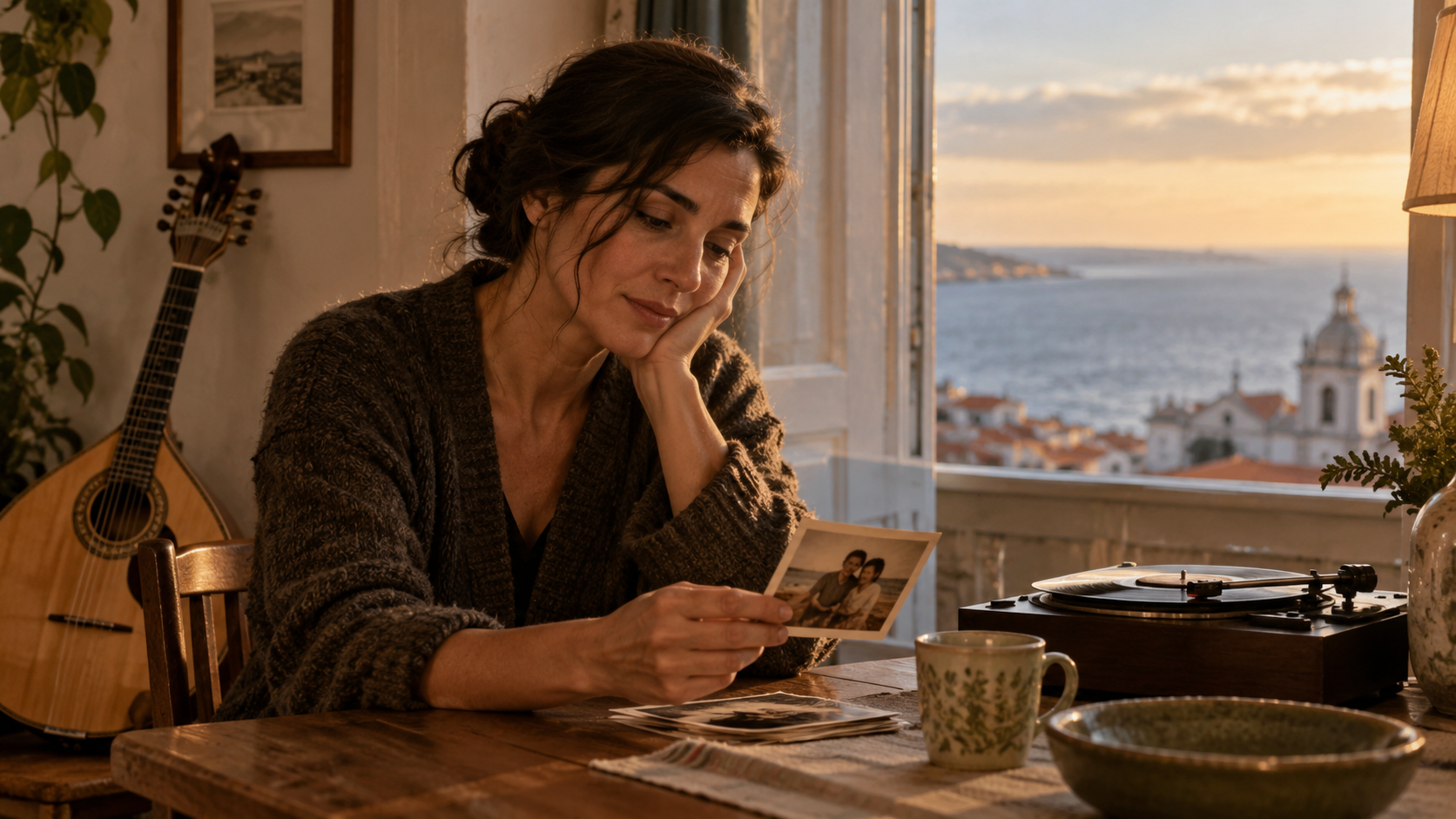
Somewhere in a candlelit room in Jerez de la Frontera, a singer opens her mouth and something happens that has no clean English name. The room goes quiet in a way that isn't polite — it's involuntary. A stranger who came for a drink finds himself close to tears. The singer isn't performing sadness. She has been overtaken by it, in front of everyone, on purpose, and she will not do it the same way twice.
The Spanish have a word for what just happened in that room. It doesn't translate. It has to be felt to be understood — which, as it turns out, is exactly the point.
IEl Concepto
What Duende Actually Means
Not a technique. Not a mood. A visitation.
Flamenco dancers and singers still use the phrase tener duende to have duende. It doesn't mean a performer is skilled. Plenty of technically flawless performers never touch it. Duende is what happens when skill stops being the point — when the body takes over and something older than craft comes through it.
You cannot practice your way into duende. You can only build a life, and an art form, that leaves the door open for it.
IIEl Origen
Born in Hardship, Sung Directly
Cante jondo — "deep song" — was never meant to be admired from a distance.
Flamenco's oldest and rawest form, cante jondo, took shape across Andalusia over centuries, carried by Romani (Gitano) communities living alongside Moorish, Sephardic Jewish, and Andalusian folk traditions in cities like Jerez, Cádiz, and the Sacromonte caves of Granada. These were not songs written for a stage. They were songs of persecution, exile, poverty, love, and death — sung by people who had nowhere else to put those feelings, and who found that singing them directly, without softening, was the only version that felt true.
Not the muse, dictating from a comfortable distance. Not the angel, gifting effortless grace from above. Something that has to be wrestled up from the ground, through the body, at cost. — on Lorca's theory of duende
Lorca spent his career trying to explain why a raw, imperfect performance could flatten a room while a technically perfect one left it untouched. His answer was that three different forces animate art, and only one of them is dangerous.
IIILa Sabiduría
Three Spirits. Only One Costs Anything.
Lorca's typology of what moves through an artist — and why duende is the one we've quietly engineered out of modern life.
The Muse
Works from outside. Dictates ideas, form, structure. Intellectual, composed, a little distant — you can commission her, more or less, with discipline and craft.
The Angel
Works from above. Showers grace and beauty without struggle. A gift, not an achievement — dazzling, but it costs the artist nothing.
Duende
Works from within. Rises from the ground, through the body, and only appears when there's real risk in the room — of failure, of exposure, of feeling something you can't take back.
The muse and the angel can both be beautiful. Neither can make a room go silent the way duende can, because neither one requires the performer to actually be in danger of anything. Duende only shows up when there's something real at stake — which is exactly what most modern performance, and most modern life, is built to remove.
IVLa Condición
We Build Catharsis Around Art, Not Into It
A scheduled hour is not the same thing as a cry that finds you mid-sentence.
Here is what modern wellness culture has quietly done to catharsis: it has scheduled it. Boxed it. Made it private, contained, and safe — a therapy hour, a journaling app, a retreat weekend with a name like "release." All of this can help. None of it is what flamenco is doing.
Cante jondo doesn't process the feeling later, alone, in a controlled setting. It happens live, in public, without a script, with real failure on the table — the singer's voice can crack, the moment can not arrive at all, and everyone in the room will know it. That risk is not a flaw in the form. It is the form.
| What We Built Around Feeling | What Flamenco Built Into It |
|---|---|
| Process it later, privately | Feel it now, in front of others |
| A safe space to process emotion | An unsafe moment where emotion breaks through |
| Catharsis as an appointment | Catharsis as the art form itself |
| Control the feeling | Be honestly seized by it |
None of this means therapy or journaling are wrong — they are containers, and containers matter. But a container built entirely around safety can quietly teach us that raw feeling only belongs behind a locked door. Duende is the counter-argument: some of the most healing moments happen when the feeling is witnessed, not managed.
VLa Ciencia
Why the Cante Singers Were Onto Something
Modern research keeps rediscovering, in pieces, what a raw voice in a small room already knew.
Aesthetic Chills
Music psychologists call the shiver of an emotionally intense moment "frisson" — a physical response tied to the brain's reward and alertness circuits, most reliably triggered by the unexpected and the unguarded, not the polished.
The Unedited Voice
A cry or a wail moves through the body differently than a controlled note. Researchers studying vocal expression have long noted that raw, non-linear vocalizing engages the nervous system in ways a technically smoothed performance doesn't.
Collective Effervescence
Sociologist Émile Durkheim's term for what happens when a group witnesses intense shared emotion together — a bonding effect that private, solitary processing simply cannot produce.
Embodied Release
Emotion regulation research increasingly points to the body, not just the mind, as where feeling is actually metabolized — movement, breath, and voice, not analysis alone.
VIQué Notar
Where Duende Still Shows Up
You've felt it. You just didn't have a word for it.
- 🎙️A voice cracking on the true thingNot the rehearsed version — the moment someone says the real sentence and their voice gives out.
- 😂A laugh that turns into tearsThe body doesn't always sort emotions cleanly. That's not a malfunction — it's duende leaking through.
- 💃Dancing badly, completelyFull-bodied and unguarded beats technically correct and careful, every time, for anyone watching.
- 🗣️Grief spoken aloud, to someoneNot journaled. Not processed alone. Said, in a room, to a person who can witness it.
VIILa Práctica
Leaving the Door Open for Duende
You cannot summon it on command. You can stop building a life that keeps it out.
- ✓Say the true sentence before you've had time to polish it.
- ✓Let your voice crack in front of someone once this week, on purpose.
- ✓Do one thing badly and completely, instead of well and half-hearted.
- ✓Bring a hard feeling into a room with another person, instead of processing it alone first.
- ✓Notice the moment right before you'd normally smooth something over — and don't.
- ✓Ask: where in my week is there any real risk of feeling too much? If nowhere, that's the gap.
- ✓Let one thing move through you all the way, without narrating it while it happens.
The Cry Doesn't Apologize.
Lorca never claimed duende could be taught. He only insisted it could be recognized — and that a culture which stops making room for it doesn't become calmer. It becomes quieter in a way that isn't the same thing as at peace.
Flamenco's singers didn't build a container around the hard feeling and step outside it when the hour was up. They built the container out of the feeling itself, and let it be witnessed, unfinished and unguarded, in front of other people.
Feel it now. Feel it fully. Let someone see it.