KALARIPAYATTU: KERALA'S MARTIAL ART OF HEALING
COURSE CATALOG ENTRY: KALARI 101 TO 401
- Institution: the Kalari, a training hall sunk below ground level
- Instructor: the Gurukkal (teacher, and often a physician too)
- Duration: traditionally years, not semesters
- Dress code: a simple cloth, bare feet
- Admission: a respectful greeting to the floor, the altar and the teacher before you step inside
COURSE DESCRIPTION
Kalaripayattu comes from Kerala and is generally counted among the oldest martial arts still practised. The name joins kalari, meaning a training ground, with payattu, meaning practice or combat. The tradition is unusual because the same teacher who taught you to fight was often the person who knew how to treat the injuries. The course below follows the four traditional stages, in order.
KALARI 101: MEITHARI (THE BODY)
Prerequisites: none. Patience helps.
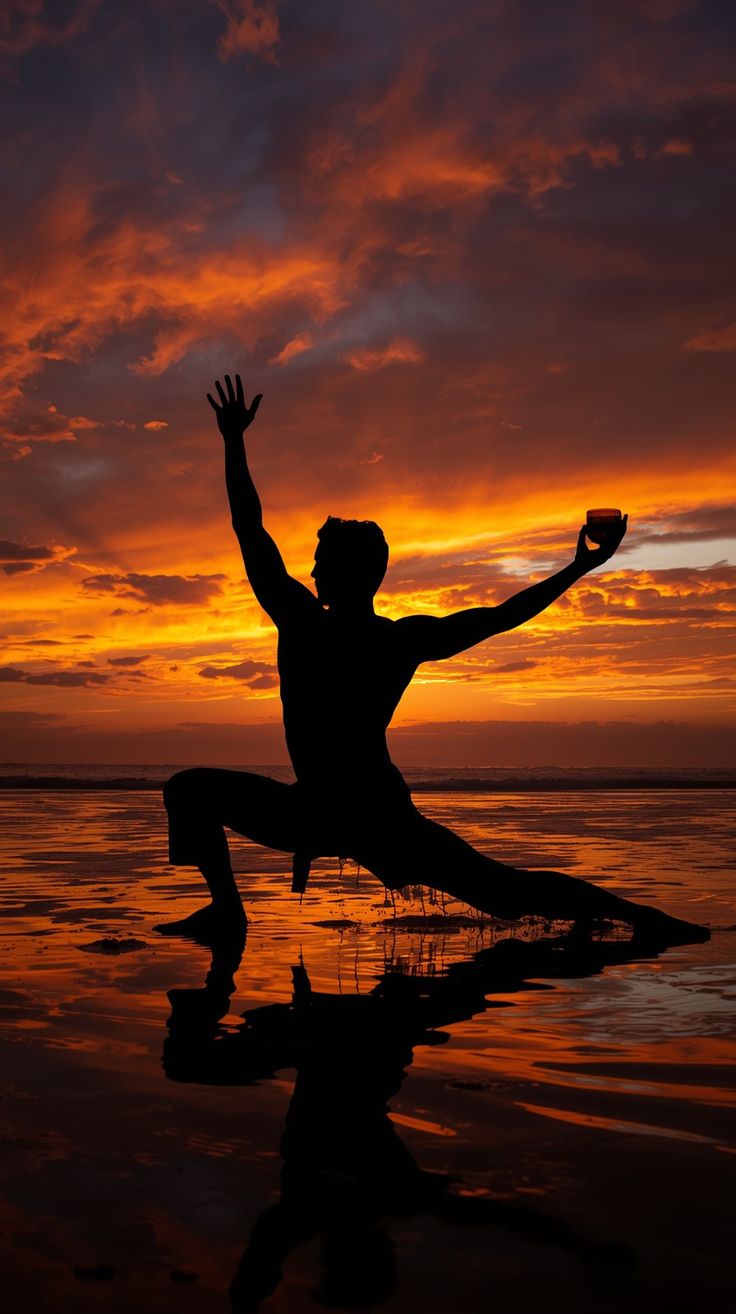
The first stage is conditioning. Students work through sequences of leaps, twists, kicks, stretches and low, deep stances, often for months before they hold a weapon. Postures called vadivu are named after animals such as the elephant, lion, horse, snake and cat, and each one is meant to train a different quality: strength, speed, balance or flexibility.
Expect flexibility to be built the hard way. Many teachers also give students a full-body oil massage, called uzhichil, as part of the training, which is meant to loosen the body and keep it supple.
KALARI 201: KOLTHARI (WOODEN WEAPONS)
Prerequisites: Meithari.
Next come weapons made of wood, led by the long staff (kettukari), a shorter stick (cheruvadi) and a curved wooden otta. They teach distance, timing and footwork without the danger of steel. The principle here is to learn control on a safe tool before you are trusted with a sharp one.
KALARI 301: ANKATHARI (METAL WEAPONS)
Prerequisites: Kolthari.
The metal stage includes swords, shields, daggers, spears and the famous urumi, a flexible whip-sword that is as hazardous to its owner as to anyone else. Its blades are thin, springy strips of steel, and a mistake can cut the person using it. It is shown to students late in the course for good reason.
KALARI 401: VERUMKAI (THE EMPTY HAND)
Prerequisites: all the above.
The last stage is unarmed combat, joined to the study of marma, the body's vital points. Ayurvedic texts such as the Sushruta Samhita describe 107 of them, and in kalari the same knowledge serves two ends. In theory it identifies where a strike does the most harm, and in healing it guides where pressure and massage should go. The teacher who taught the strikes also taught the treatments.
OFFICE HOURS: THE TREATMENT ROOM
Traditional kalaris often have a treatment area attached. Care has included hot-oil massage, bone-setting, and herbal poultices for sprains and sore joints. It follows from the teacher's double role: if you train hard, you are going to need someone who understands the body.
READING LIST: A SHORT HISTORY
- Origin stories. Legend credits the sage Parasurama with founding both Kerala and the martial tradition. Another popular legend says that a monk named Bodhidharma carried the art to China, where it shaped Shaolin. That one is widely repeated and also widely disputed, so treat it as a story rather than a fact.
- The warrior ballads. The Vadakkan Pattukal, the northern ballads of Kerala, celebrate warriors such as Unniyarcha, a woman remembered for her skill.
- Decline. In the early 1800s, as British rule tightened across Malabar, the practice of arms was restricted and kalari faded.
- Revival. In the early twentieth century it was brought back, with a revival around Thalassery in the 1920s, and it is now taught as both sport and cultural heritage.
- Influence. Kathakali performers have long trained in kalari for body control, and it has fed into other Kerala performing arts.
GRADING: WHAT DOES THE EVIDENCE SAY?
Here the transcript gets thinner. There are few rigorous studies of kalaripayattu, and most are small. A tradition built around flexibility, balance and strength training is plausibly good for those things, and general research on balance training supports that idea. But the specific claims you will hear, such as that marma massage cures particular diseases, or that marma strikes can disable on contact, lack solid scientific proof. Treat the healing claims as traditional practice, not as medicine.
DISCLAIMERS BEFORE YOU ENROL
- Learn from a qualified teacher. This is a martial art, so injuries are real.
- Anyone with joint, back or heart problems should ask a doctor first.
- Oil massage and bone-setting belong with trained practitioners. Do not try to copy marma techniques at home.
- Weapons stages are for experienced students under supervision only.
- Look for a school with a clear lineage, and be careful of "show" classes aimed at tourists.
FINAL REMARKS
The best lesson in this syllabus is the order. Body first, then wooden tools, then steel, then bare hands, and always the habit of care running underneath. A martial art that begins with conditioning and finishes with healing has an unusual idea of what strength is for.