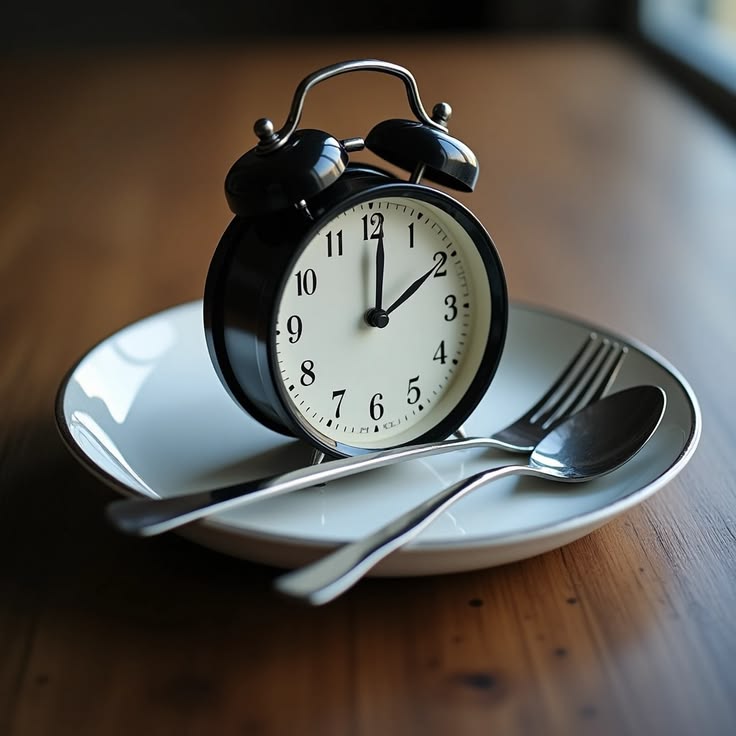
Picture two groups of mice in a lab at the Salk Institute in California. Both groups get the same rich, high-fat food and exactly the same number of calories. The only difference is when they are allowed to eat. One group can graze all day and night. The other gets an eight-hour window, then nothing until the next day.
By the end of the experiment, the all-day grazers had gained weight and developed metabolic problems. The window mice stayed lean and healthy, on the same food and the same calories. When the results were published in 2012 by Satchin Panda's lab, they set off a small revolution. If the clock mattered this much for mice, maybe it mattered for us.
THE HUMANS SHOW UP
The first human results were encouraging, though tiny. In 2018, researchers asked a handful of men with prediabetes to eat all their food in an early six-hour window for five weeks, with enough calories to keep their weight steady. Only eight men completed the study. Their insulin sensitivity and blood pressure still improved, even though they had not lost weight. Another small pilot in 2020 put adults with metabolic syndrome on a ten-hour window for twelve weeks. They lost weight and their blood pressure dropped, though there was no comparison group.
At that point it looked like a bargain: change when you eat, not what you eat, and get healthier.
THEN THE BIG TRIALS ARRIVED
- Larger, tougher trials tell a quieter story. In 2020, a trial called TREAT randomly assigned 116 adults with overweight or obesity to a 16:8 schedule or to eating normally for twelve weeks. The time-restricted group did not lose meaningfully more weight, and there were hints that they lost a little muscle too.
- Then came the biggest test so far. In 2022, a trial in the New England Journal of Medicine followed 139 adults with obesity for a full year. Everyone was on a calorie-restricted diet, and half of them also kept to an eight-hour window. The window added nothing. Both groups lost about the same amount of weight.
- So the first lesson is a humbling one. Once calories are matched, timing alone has not beaten simply eating less.
SO WHY DOES IT WORK FOR SOME PEOPLE?
Here is a plausible explanation, though it is a hypothesis, not a proven fact. For many people, a short eating window works by deleting the extras: the late-night snack, the mindless pantry visit, the third helping eaten at 10 p.m. Fewer eating hours often means fewer calories, with no counting required. If that is true, the clock is a tool for eating less, and it works the way a closed kitchen works.
That would explain why the early-window results are interesting but not decisive. Some scientists think eating earlier in the day lines up better with our body clocks and may help blood sugar even without weight loss. The 2018 men's study hints at that, but it is a very small study, and the idea is still being tested.
THE HEADLINE THAT SCARED EVERYONE
In March 2024, a preliminary study presented at an American Heart Association conference made headlines around the world. It tracked about 20,000 US adults and found that people who ate within less than eight hours a day had a 91 percent higher risk of dying from cardiovascular disease than people who ate across 12 to 16 hours.
It sounded alarming, but there are good reasons to treat it carefully. It was an observational study, so it can only show an association. It was presented as a preliminary abstract, and it had not been peer reviewed at the time. It relied on two self-reported days of eating. The short-window group also contained more smokers and more men, which could skew the results. The authors themselves said it did not show that the eating pattern caused the deaths, and overall death rates were not higher. It is a reason to run longer, better studies, not a reason to panic.
WHAT TO DO WITH ALL THIS
If you are curious, treat it like an experiment on yourself:
Pick a window you can actually keep, such as 10 or 12 hours. A schedule that wrecks your social life or sleep will not last.
Lean earlier if you can. Finishing dinner earlier is the version with the most hopeful, though still limited, evidence.
Eat well inside the window, with enough protein and plenty of real food. Fasting does not cancel a poor diet.
Check in after a few weeks. If you feel dizzy, irritable or constantly counting the hours, stop.
WHO SHOULD ASK A DOCTOR FIRST
Talk to a doctor before trying it if you take medication for diabetes or blood pressure, are pregnant or breastfeeding, are under 18, or are older and concerned about losing muscle. Shift workers should be careful too, since a fixed window may clash with irregular days. And if you have ever had a difficult relationship with food, skip this and talk to a professional instead.
THE QUIET BOTTOM LINE
The mice made it look like a miracle. The humans have made it look like a useful trick, not a magic one. Timing may matter a little, and food quality, enough sleep and total amount probably matter more. If a schedule helps you eat in a way you can keep up, good. If it adds stress, there is no strong evidence you are missing out.