Qi Gong. The Physician Who Was Paid to Keep You Well.
How Chinese imperial physicians prescribed movement, not medicine — and were dismissed the moment their patient fell ill.
What Qi Gong Actually Means
In the West, we have folded Qi Gong into the broad, slightly vague category of "gentle exercise" — something between stretching and tai chi, practised by the elderly in parks. This is a diminishment. The Chinese term carries a far more precise instruction.
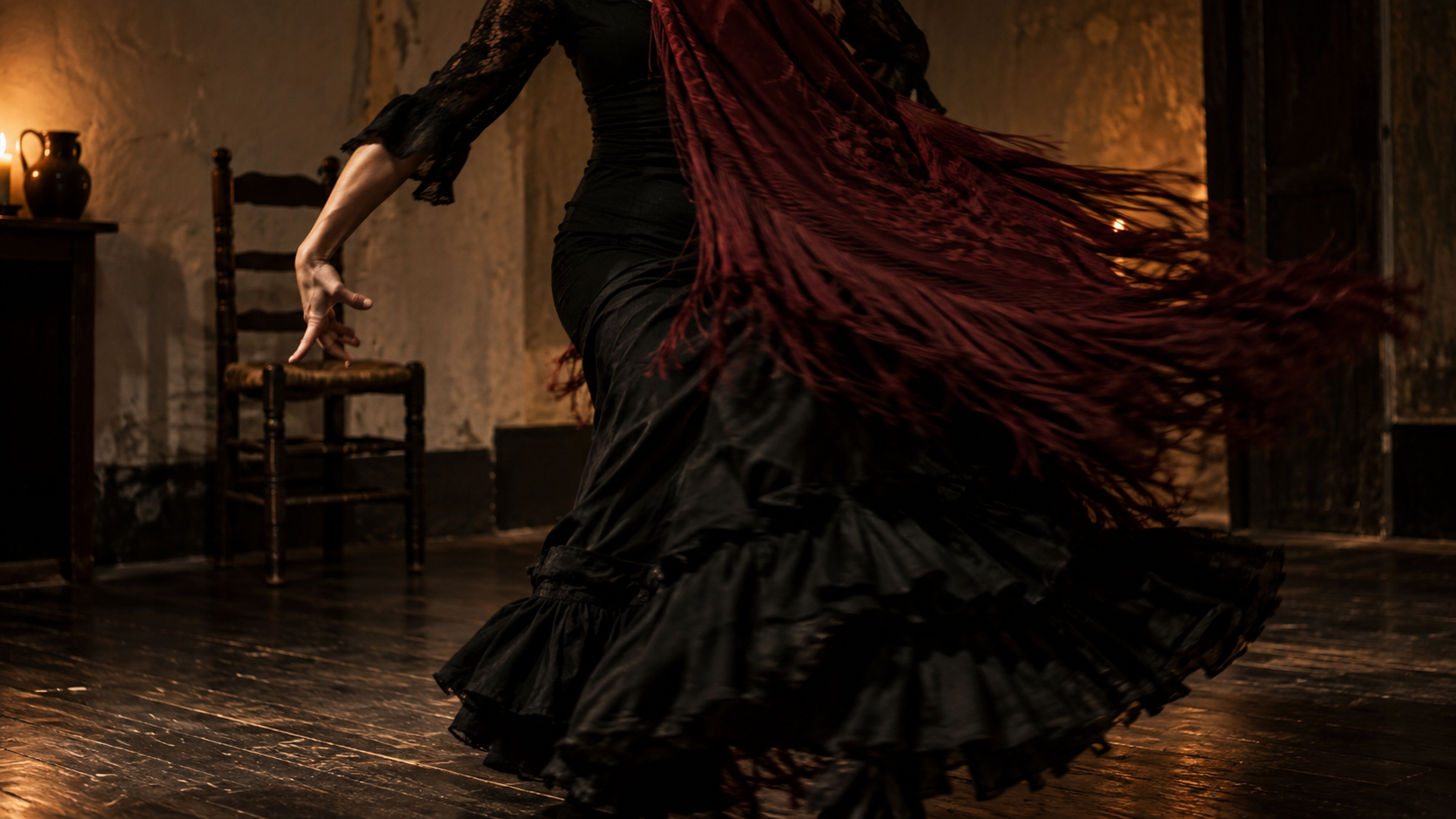
Together, Qi Gong describes something closer to the cultivated skill of directing one's own vital energy — through breath, posture, and deliberate, unhurried movement. It was never meant to burn calories. It was meant to keep the system that runs the body running well.
A Medicine That Moved
The earliest physical evidence is remarkably literal. In 1973, archaeologists opened a Han dynasty tomb at Mawangdui and unrolled a silk manuscript dated to around 168 BCE. On it: forty-four painted figures, each in a different posture, each labelled with the ailment it addressed or the animal it imitated — bear, bird, monkey, dragon. It is, in effect, the oldest illustrated exercise manual ever recovered. Movement, prescribed by name, over two thousand years before anyone called it a "wellness routine."
The philosophy behind these postures had already been set down in the Huangdi Neijing — the Yellow Emperor's Inner Canon — the foundational text of Chinese medicine. It described the body as a network of channels, the jingluo, through which qi was meant to flow freely. Illness, in this framework, was rarely an invading enemy. It was a blockage. A stagnation. A place where the current had stopped moving.
The Silk Manuscript, c. 168 BCE
Forty-four postures painted on silk at Mawangdui, each tied to a specific complaint — knee pain, deafness, fever. Daoyin, "guiding and pulling," recorded as clinical instruction.
Hua Tuo and the Five Animal Frolics
Around the 2nd century CE, the physician Hua Tuo distilled these traditions into Wuqinxi — the tiger, deer, bear, ape, and bird. He is said to have told his students that flowing water never stagnates, and a door hinge that keeps turning never rusts. The body, he argued, obeyed the same law.
The Imperial Physician
By the Tang and Song courts, physicians attached to the imperial household were expected to keep the emperor well — not simply to cure him once he fell ill. Daoyin and breath cultivation sat alongside herbal medicine as first-line prescription, not last resort.
To treat a disease that has already formed is like digging a well after growing thirsty, or forging weapons after the battle has begun. Huangdi Neijing, Inner Canon of the Yellow Emperor
Chinese medical folklore carries a story about this era that has outlived its own historical footnotes, precisely because it makes the point so cleanly: that a court physician was retained on salary for as long as his patient remained healthy — and that the fee stopped the moment the patient fell ill. True in every documented particular or not, the story survives because it names something real. The incentive was inverted. The physician's task was not to be summoned. It was to make sure he never needed to be.
Why We Wait Until We're Broken
Modern healthcare, for all its precision, is built almost entirely around the moment something has already gone wrong. We do not visit a doctor to be told we are well. We visit once a symptom has announced itself — and by then, the stagnation the old physicians worried about has usually been building for years.
Movement, in this system, has drifted into its own strange corner. It is aesthetic — something we do to look a certain way — or punitive, a debt paid after a bad meal. Rarely is it medicinal. Rarely is it slow. We have gyms built for exertion and almost nowhere built for the quieter, older idea that a body can be tended the way a garden is tended: daily, gently, before anything visibly wilts.
The average adult now sits for the better part of the waking day. Chronic stress keeps the nervous system in a state the old physicians would have recognised instantly as blocked flow — the breath shallow, the shoulders locked, the qi, in their language, going nowhere. We have inherited the disease model. We let go of the maintenance model that was meant to prevent it.
What Qi Gong Actually Teaches
Strip away the mysticism that modern audiences sometimes bring to it, and Qi Gong rests on principles that are almost stubbornly practical.
Movement should restore, not deplete. Daoyin postures were slow by design — never pushed to exhaustion, never competitive. The goal was circulation, not conquest. A practice that leaves you more depleted than when you began has, by this logic, missed the point entirely.
Breath leads the body. In tuna — "expelling the old, drawing in the new" — the exhale was considered as therapeutic as the inhale. Movement was timed to breath, not the other way around, because breath was understood as the more fundamental rhythm.
Stagnation, not invasion, is the root of most complaint. Where a great deal of modern medicine looks for a pathogen to eliminate, this older framework looked for a current that had stopped moving — a joint held tense, a breath held shallow, a channel left untended — and asked how to get it flowing again.
| "What can fix this once it's broken?" | → | "What keeps this from breaking?" |
| Exercise as punishment | → | Movement as circulation |
| Treating the symptom | → | Tending the flow |
| Effort as intensity | → | Effort as consistency |
Why the Physicians Were Right
Qi Gong and its close relative tai chi have become some of the most studied "gentle movement" practices in modern medicine, largely because their effects turn out to be unusually easy to detect. Reviews in sports medicine and geriatrics journals have repeatedly linked regular practice to improved balance and a meaningfully lower rate of falls in older adults — one of the outcomes clinicians care about most, because falls are a leading cause of serious injury in later life.
Trials examining blood pressure have found consistent, modest reductions among regular practitioners, in a range comparable to other moderate lifestyle interventions. Studies on cortisol and heart-rate variability suggest the slow, breath-led pacing does something measurable to the nervous system's baseline stress response — not by relaxing the mind in the abstract, but by physically retraining the rhythm the body defaults to.
Breath & Nervous System
Slow, coordinated breathing has been shown to shift the body toward a calmer, parasympathetic-dominant state within minutes of practice.
Balance & Falls
Among older adults, consistent practice is associated with improved balance and fewer falls — a finding replicated across multiple reviews.
Cardiovascular Load
Regular practitioners show modest but consistent reductions in resting blood pressure compared to inactive control groups.
None of this required the language of qi or meridians to validate it. But it is worth noticing how closely the modern findings trace the old map — the breath, the joints, the slow circulatory work — as though the imperial physicians had simply been measuring with different instruments.
Where Stagnation Lives in Everyday Life
The held breath at your desk
Notice how shallow your breathing becomes during focused work — high in the chest, barely moving the belly.
The shoulders that never drop
Tension held in the same three places, all day, every day, without ever being consciously released.
The body that hasn't moved in hours
Not exhaustion — stillness. The particular stiffness of a joint that has simply not been asked to move.
The exhale you forget to finish
Most people stop an exhale halfway. The old physicians considered a complete exhale the more important half of the breath.
A Daily Qi Gong Framework
- 吸Begin standing, feet hip-width apart, knees soft. Breathe in slowly through the nose for a count of four, letting the belly — not the chest — expand first.
- 呼Exhale for a count of six, longer than the inhale, and let the shoulders drop as you do. Repeat for five full breaths before moving at all.
- 熊The Bear: shift your weight slowly from foot to foot, arms loose at your sides, as though rocking a great weight without ever bracing against it.
- 鶴The Crane: raise both arms slowly overhead on the inhale, palms rising like wings; lower them on the exhale, as though pressing gently down through water.
- 節Once a day, before movement, ask: where in my body has nothing moved today? Begin there.
- 終Close by standing still for thirty seconds, simply noticing the breath return to its normal rhythm. This stillness is part of the practice, not the absence of it.
Where the Current Flows, There Is No Pain.
The imperial physicians never claimed to defeat illness. They claimed something quieter and, in the end, more useful: that a body kept moving rarely gives you reason to summon a physician at all.
Qi Gong was never a cure. It was maintenance — offered daily, in small unhurried doses, long before anything needed curing.