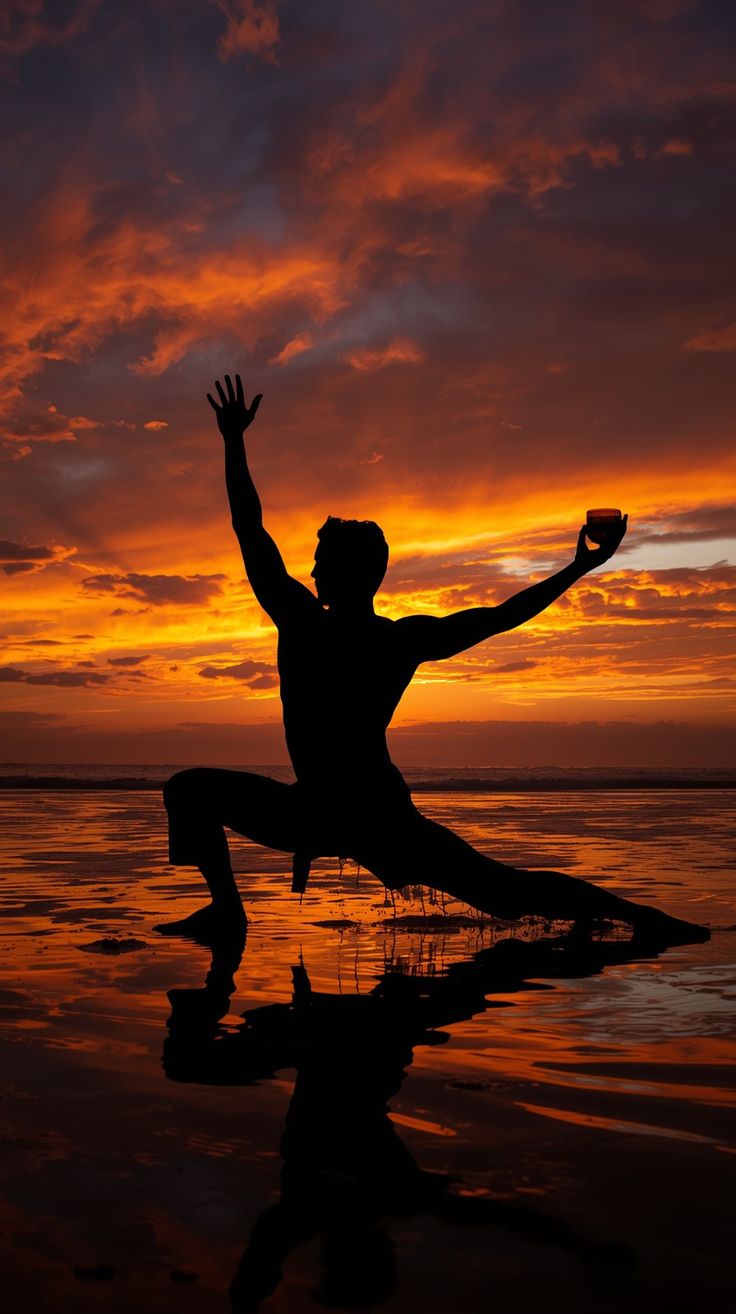
Before the sun is fully risen over every city in China — and now in parks across the world — groups of people move in slow, deliberate unison. Arms trace arcs. Weight shifts like tides. Breath matches motion. It is ancient. It is powerful. And science is only beginning to understand how much it does for the human body and mind.
Born from Taoism. Perfected Over Centuries.
Tai Chi — formally Taijiquan — emerged from Taoist philosophy and martial arts traditions in 13th century China. Its founding principle is simple: the universe moves in balance between opposing forces — yin and yang, soft and hard, empty and full. Tai Chi is the physical practice of that balance.
Over centuries, it evolved from a martial art into a meditative movement practice — one that requires no equipment, no gym, no age limit, and no particular fitness level to begin.
Yin and Yang
Every movement contains its opposite. Strength flows from softness. Power is stored in stillness.
Qi — Life Energy
Movement cultivates and circulates qi — the vital energy believed to flow through all living things.
Softness
Tai Chi wins through yielding, not force. Water shapes rock not by strength but by consistency.
The Science of Slow Movement
What Taoist masters intuited, modern medicine is now quantifying. The slow, weight-shifting movements of Tai Chi produce measurable outcomes across nearly every dimension of health.
Balance & Fall Prevention
Tai Chi is the most evidence-backed intervention for reducing falls in older adults — improving proprioception and coordination through its weight-shifting sequences.
Cognitive Protection
Regular practice is associated with improved memory, attention, and reduced risk of cognitive decline — mind and body moving together preserves both.
Heart Health
Studies show Tai Chi reduces blood pressure, improves circulation, and reduces cardiovascular risk — gently, sustainably, with zero impact on joints.
Stress & Anxiety
The meditative quality of the movement activates the parasympathetic nervous system. Practitioners report it as "moving meditation" — and the brain scans agree.
The supreme good is like water, which benefits ten thousand things without striving.
From Chinese Parks to Everywhere
What began in Chinese public parks has spread to hospital rehabilitation programmes, corporate wellness retreats, school PE classes, and smartphone apps. The World Health Organisation recommends it. The NHS offers it. Senior centres from Toronto to Tokyo practice it at dawn.
Its universality makes sense: Tai Chi asks nothing of you but time and attention. And it gives back everything else.
Stillness in Motion. Power in Softness.
In a world addicted to speed and intensity, Tai Chi offers the counterintuitive truth: the most profound strength comes from slowing down.