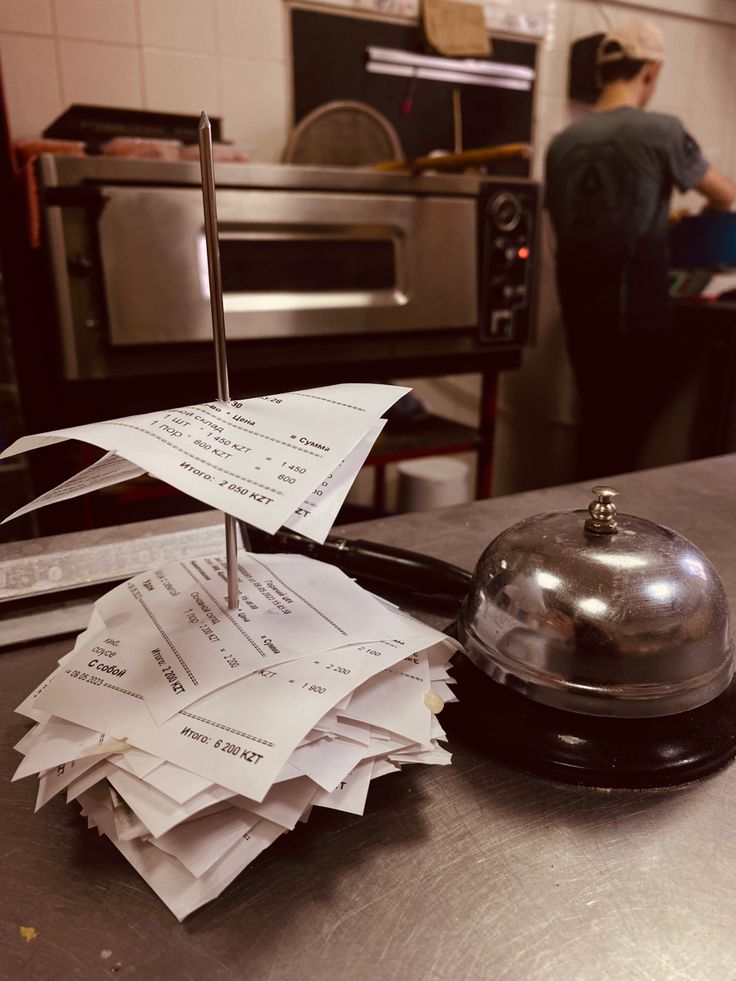
Here's what an eight-hour shift at the counter actually bills for, versus what it actually costs the person standing there.
SHIFT RECEIPT — 8 HOURS
- Base wage ................................... $92.00
- Overtime ...................................... $0.00
- ----------
PAID TOTAL .................................. $92.00
- UNBILLED LINE ITEMS (not itemized, not paid)
- Suppressing irritation at rude customer ...... $0.00
- Performing warmth through a headache ......... $0.00
- De-escalating an angry complaint, smiling
- the entire time .............................. $0.00
- Laughing at a joke that wasn't funny ......... $0.00
- Holding a neutral face through a
- humiliating comment ........................... $0.00
- ----------
UNBILLED TOTAL ................................ $0.00
Nobody hands you this second receipt at the end of a shift, but the work on it happened just as surely as the work on the first one. There's an actual name for it, a real body of research behind it, and a reason it never makes it onto the books.
THE WOMAN WHO NAMED IT
In 1983, the sociologist Arlie Hochschild published a book called The Managed Heart, built around two groups of workers she spent years studying closely: flight attendants and bill collectors. The flight attendants were trained, explicitly and in detail, to produce warmth on command, to smile through turbulence, rude passengers, and exhaustion, because friendliness was quite literally part of the product the airline was selling. The bill collectors were trained to do the opposite: to project suspicion and a controlled edge of hostility, because that emotional tone was what got people to pay. Neither group was simply doing a job. Both were being paid, in part, to manufacture a specific feeling and project it convincingly to a stranger. Hochschild gave this a name that stuck: emotional labor.
The insight wasn't that service work involves emotions, which is obvious. It was that managing those emotions, specifically producing ones you don't actually feel, or suppressing ones you do, is itself a form of labor, with its own cost, even though it almost never appears on a wage slip or a job description.
TWO WAYS TO FAKE IT, AND ONLY ONE OF THEM HURTS
Hochschild drew a distinction that later researchers built an entire field around. Surface acting is putting on the expression without changing what you actually feel underneath, smiling while still furious. Deep acting is trying to genuinely talk yourself into the required feeling, actually working to feel sympathetic rather than just looking it.
The psychologist Alicia Grandey, whose research has shaped much of the modern study of this topic, found in a widely cited 2000 paper that these two strategies are not equally costly. Surface acting is consistently linked to higher emotional exhaustion and burnout. Deep acting, trying to actually feel the required emotion rather than just performing it, tends to be considerably less damaging, sometimes even protective. The gap between the two is essentially the gap between genuinely managing a feeling and simply wearing it as a mask for eight hours straight. Masks, it turns out, are expensive to hold up.
WHY THIS JOB CATEGORY IS MOSTLY INVISIBLE, AND MOSTLY FEMALE
Hochschild's original research noticed something else worth sitting with: the jobs requiring the heaviest emotional labor, flight attendant, nurse, teacher, childcare worker, receptionist, are disproportionately filled by women, and are also, as a category, among the most chronically undervalued and underpaid relative to their actual demands. The pattern isn't a coincidence so much as a quiet economic consequence of treating emotional labor as something that doesn't count as real work, because it doesn't show up as a measurable output the way a finished product or a closed sale does. You can put a price on units assembled. Nobody built a line item for "stayed calm while being screamed at, forty times today."
THE ONE PLACE THE SMILE DOES GET PRICED
There's a strange exception worth knowing, because it's almost the only place this invisible labor gets a visible price tag: tipping. A body of research on server behavior and tip size has found that visible, warm, attentive emotional performance, a genuine-seeming smile, friendly small talk, remembering a regular's order, is directly and measurably correlated with higher tips. In other words, the market does occasionally pay for emotional labor, just inconsistently, informally, and almost always by pushing the cost of figuring out fair compensation onto the customer's mood rather than the employer's payroll.
WHAT THIS MEANS FOR ANYONE MANAGING PEOPLE
The practical takeaway isn't that service workers should stop smiling, or that companies should suddenly start itemizing emotional output on a pay stub. It's narrower and more useful than that. Surface acting, the forced smile with nothing behind it, is the version that burns people out. Workplaces that give employees more genuine autonomy over how they handle hard interactions, better training in actually reframing a difficult customer rather than just masking irritation at them, and realistic recovery time after emotionally heavy shifts, are intervening on the exact mechanism Grandey's research identified as the costly one. Recognizing emotional labor as real labor, even informally, even just in how a manager talks about it, is itself a small but genuine form of payment on a bill that's been sitting unpaid for a long time.