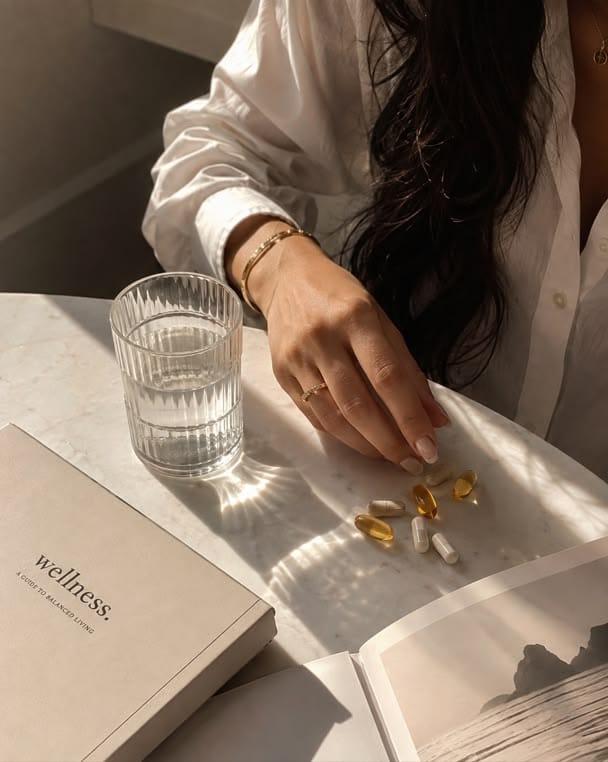
Picture a clinic in Boston in 2009, and a researcher named Ted Kaptchuk handing a patient a small bottle of pills. The label reads, in plain letters: placebo. The patient has irritable bowel syndrome and has been struggling for years. Kaptchuk doesn't hide a thing. He tells her the pills contain no medicine, that they are made of an inert substance, like sugar pills. Then he tells her something that sounds almost reckless for a scientist to say: that placebos have been shown to help people like her, and that she should take them twice a day anyway.
Three weeks later, she feels better. So do a lot of the others in the room.
Placebos were supposed to be a magic trick, and magic tricks stop working once the audience sees the wire. This one didn't.
THE RULE EVERYONE ASSUMED
For most of the twentieth century, the placebo had one job: to be the thing that doesn't work. Drug trials used it as the baseline, the "nothing" against which a real medicine had to prove itself. And its power, whatever power it had, was assumed to depend entirely on deception. Patients had to believe the pill was real. Tell them the truth and the spell broke.
That assumption was so deep it barely counted as a hypothesis. It was just how placebos worked, the way water was just wet.
Kaptchuk and his colleagues at Harvard decided to test it, almost as a provocation. They recruited eighty people with IBS and split them into two groups. One group got no treatment, just the same attention and check-ins. The other got the openly labeled placebo pills. After three weeks, a clear majority of the placebo group reported adequate relief of their symptoms, compared with roughly a third of the no-treatment group. Their results were published in 2010 and landed with the quiet shock of a magician explaining the trick and then doing it anyway.
IT KEPT HAPPENING
One small study can be a fluke, so other teams tried it. Open-label placebos have since been tested on chronic low back pain, where patients reported less pain and less disability than those who carried on with their usual care. They've been tested on cancer-related fatigue, on seasonal allergies, on menopausal hot flushes, and on a handful of other conditions where the main complaint is a symptom the patient feels rather than a number a machine can read.
The pattern is fairly consistent, and it comes with fine print worth reading. The studies tend to be small. The benefits show up in how people feel, such as pain, fatigue, and discomfort, not in tumor size or blood chemistry. And an open-label placebo is no replacement for treatment of a serious disease. Nobody is suggesting you swap insulin for a sugar pill. The more honest claim is narrower and stranger: for certain symptoms, the ritual of treatment can help even when the treatment itself is empty and everyone knows it.
SO WHAT IS DOING THE WORK?
Nobody has the full answer yet, but the leading explanations are surprisingly ordinary.
- Conditioning. Most of us have swallowed thousands of pills over a lifetime and, more often than not, felt better afterward. The body may have learned the sequence: pill in, relief follows. A pill is a cue, and cues can work on their own, a bit like how the smell of coffee can wake you up before the caffeine arrives.
- Ritual and care. In these trials, someone took the patient's symptoms seriously, explained a plan, and asked them to follow a daily routine. That is a lot of what healing has always looked like, long before the pharmacy existed.
- A different kind of expectation. The patients weren't fooled into expecting a cure. They were told something honest: this may help, it's worth a try. It seems that a hopeful, open-eyed expectation can be enough without any lie to prop it up.
THE PART THAT SHOULD MAKE US UNCOMFORTABLE
This idea has a shadow side, and it's worth saying out loud. If an honest sugar pill can ease symptoms, then every real treatment comes wrapped in some of the same ingredients: the white coat, the clean packaging, the confident explanation, the daily habit. Some fraction of what we credit to the active ingredient may be the wrapping.
That is not an insult to medicine. It is a reminder that people respond to meaning, not just molecules. A treatment is also a message: someone thinks you're worth treating, and something is being done.
WHAT THIS MEANS IF YOU RUN A WELLNESS PROGRAM
Here's the useful bit. Wellness programs are, in part, rituals of care. A scheduled stretch break, a shared walking challenge, a quiet room with a door that closes: each one works partly through what it physically does and partly through what it says, which is that this workplace takes your wellbeing seriously.
That's not a reason to dismiss the effect as "just placebo." If the signal of care is real, the benefit is real. But it is a reason to be honest about it:
- Don't oversell. A program doesn't need to promise miracles. Offering something sincerely, with a clear and truthful description, can be enough.
- Protect the ritual. Consistency, a regular time, a familiar format, and a visible human behind it all matter more than novelty.
- Keep the real stuff real. Placebo-style effects work best on how people feel day to day. They are no stand-in for sleep, safe workloads, or proper medical care.
- Measure honestly. Ask people what actually helps, and track it beyond the first enthusiastic month.
THE SHORT VERSION
For a century, we believed the placebo needed a lie to work. Then researchers handed people pills labeled "placebo," told them the truth, and many of them felt better anyway. The lesson isn't that your mind can fool you into health. It's that attention, ritual, and honest hope are active ingredients in their own right, and you don't have to hide them for them to work.